How Much Do You Need to Retire in the Philippines?
Short answer: In a provincial city like Dumaguete, a single retiree can live a modest life on about $500–800 a month and a comfortable one on $1,000–1,500. A couple lives comfortably on about $1,200–2,000. On top of that come one-off costs for the retirement visa, moving and furnishing, and a health insurance policy that gets more expensive with age. This article breaks it all down so you can check the numbers against your own pension.
All amounts are in Philippine pesos (₱) with approximate US dollars, at about ₱63 to the dollar (October 2026).
Where you live decides most of the budget
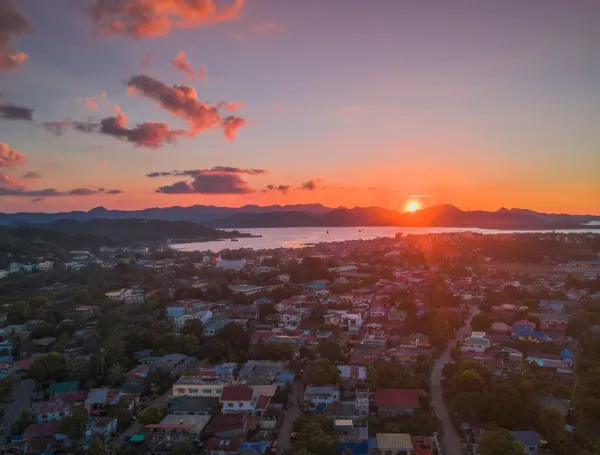
“The Philippines” is not one price level. Retiring in Makati or BGC in Metro Manila can cost twice as much as retiring in a provincial city. Most foreign retirees therefore settle outside the capital – in places like Dumaguete, Valencia or Dauin on Negros Oriental. The numbers in this article are for Dumaguete and the surrounding towns. For a comparison with Manila, Cebu and other cities, see our article Cost of Living in the Philippines 2026.
Monthly budget at a glance
| Profile | Per month (USD) | Lifestyle |
|---|---|---|
| Single, modest | $500 – 800 | Small apartment, local food, fan or limited aircon, tricycles |
| Single, comfortable | $1,000 – 1,500 | Furnished 1-bedroom, aircon, eating out regularly, health insurance |
| Couple, comfortable | $1,200 – 2,000 | House or 2-bedroom, aircon, car or regular Grab, trips within the Philippines |
Couples are cheaper per person because rent, electricity and internet are shared.
What a comfortable month really costs – line by line
Example: a single retiree in a furnished 1-bedroom apartment in Dumaguete.
| Item | Per month (₱) | Approx. USD |
|---|---|---|
| Rent (1-bedroom, furnished) | 12,000 – 20,000 | 190 – 320 |
| Electricity (with aircon) | 3,000 – 6,000 | 50 – 95 |
| Water | 300 – 600 | 5 – 10 |
| Fiber internet + mobile | 1,600 – 2,900 | 25 – 45 |
| Groceries | 8,000 – 15,000 | 125 – 240 |
| Eating out | 5,000 – 10,000 | 80 – 160 |
| Transport (tricycle, Grab, motorbike) | 2,000 – 5,000 | 30 – 80 |
| Health insurance (more from age 65) | 6,000 – 15,000 | 95 – 240 |
| Other (household, clothes, hobbies, buffer) | 5,000 – 10,000 | 80 – 160 |
| Total | approx. 43,000 – 85,000 | approx. 680 – 1,350 |
Two items swing the budget the most: aircon, because electricity is expensive in the Philippines, and health insurance, because premiums rise with age. Check current rents with prices in our rental listings.
One-off costs before you start
- Retirement visa (SRRV): application fee of $1,500 for the main applicant, plus an annual PRA fee of $360. The bigger item is the visa deposit (see below).
- Flights and shipping: most retirees ship little and buy furniture locally.
- Furnishing and deposits: landlords usually ask for one or two months’ deposit plus one month in advance. If you rent unfurnished, budget for furniture, appliances and aircon units.
- Emergency fund: keep several months of living costs available, separate from the visa deposit – for medical bills, flights home or repairs.
The retirement visa: how much money it ties up
The most common long-term visa for retirees is the Special Resident Retiree’s Visa (SRRV) of the Philippine Retirement Authority. Since September 2025 the minimum age is 40. The key figures for applicants aged 50 and over:
| With pension | Without pension | |
|---|---|---|
| Visa deposit | $15,000 | $30,000 |
| Pension required | at least $800/month (single) or $1,000 (couple) | – |
Applicants aged 40 to 49 pay a higher deposit. The deposit stays your money in a Philippine bank, and under PRA rules it can be converted into an approved investment, such as a condominium unit. Until you leave the program, however, it is tied up.
Not ready to commit? Many people start on a tourist visa: you enter visa-free and extend your stay step by step at the Bureau of Immigration, for up to 36 months in total. If you are married to a Filipino citizen, the 13(a) resident visa is usually the better route. All options are explained in our guide Visa for a Long-Term Stay in the Philippines.
Health insurance: the cost that grows with age
Healthcare in Dumaguete is good for everyday needs and moderate procedures. For major surgery or complex treatment, most people go to Cebu or Manila. Private hospitals expect payment or proof of insurance before treatment.
- Medicare generally does not pay for care outside the United States. US retirees therefore need separate cover in the Philippines.
- International expat insurance becomes noticeably more expensive after 60. For 65 and over, premiums of roughly $110–310 a month are common, depending on the plan and deductible – some insurers no longer accept new customers above a certain age.
- PhilHealth, the national health insurance, is open to foreign residents such as SRRV holders. It covers fixed amounts per case, which often leaves a large share to pay yourself at private hospitals – useful as an addition, not as your only cover.
Get insurance quotes for your age before you decide on your budget. For many retirees it is the second-largest monthly item after rent.
Your pension in the Philippines
US Social Security can be paid to US citizens living in the Philippines, directly into a US or Philippine bank account. For SRRV holders, foreign pensions are generally not taxed in the Philippines. Check your own situation with the Social Security Administration and a tax adviser, especially if you have other income.
Remember the exchange rate: your pension is paid in dollars, your rent in pesos. A stronger peso means less money in your pocket. Plan with a buffer of 10–15%.
Rent first, buy later
Our honest advice: rent for the first six to twelve months. You will find out whether you prefer the city, the beach or the cooler mountain air of Valencia, and you will buy later with local knowledge. If you then want to buy, remember that foreigners can own a house or a condo, but not the land. How that works is explained in Buying a House in the Philippines and Can Foreigners Buy Property in the Philippines?
Frequently Asked Questions
How much money do you need to retire in the Philippines?
In a provincial city like Dumaguete, about $1,000–1,500 a month for a comfortable single life and $1,200–2,000 for a couple, including health insurance. On top of that comes the SRRV visa deposit of $15,000 (with a pension, age 50 and over) or $30,000 (without), plus an emergency fund.
Can you retire in the Philippines on $1,000 a month?
As a single person in Dumaguete, yes – if you rent a modest apartment and use aircon sensibly. It gets tight once health insurance for older ages, regular eating out and travel are added. In Metro Manila, $1,000 a month is not enough for a comfortable life.
Is $1,500 a month enough for a couple?
In Dumaguete it can work for a couple with a simple lifestyle, especially if one partner has local health cover. With a house, a car and private insurance for two, plan with $1,800–2,000.
How much is the deposit for the retirement visa (SRRV)?
For applicants aged 50 and over: $15,000 with a pension of at least $800 a month (single) or $1,000 (couple), and $30,000 without a pension. Applicants aged 40 to 49 pay more. The deposit can be used for an approved investment such as a condo (as of October 2026).
Does Medicare cover me in the Philippines?
Generally no. Medicare covers care outside the United States only in rare exceptions. US retirees need private international or local health insurance in the Philippines.
Can I receive my US Social Security in the Philippines?
Yes. US citizens can receive Social Security benefits while living in the Philippines, paid into a US or Philippine bank account. Check the details with the Social Security Administration.
Bottom line
Retiring in the Philippines is affordable if you choose the right place. In Dumaguete, a monthly budget of $1,000–1,500 for one person or $1,200–2,000 for a couple buys a comfortable life by the sea. Plan carefully for the visa deposit and for health insurance at your age – those two items decide whether the numbers work for you.
Ready to find your place?
Want to see what your budget can rent or buy in Dumaguete? Genessa Nacional, Real Estate Consultant (Filipino Homes), knows the market on the ground and also offers video viewings for buyers and tenants abroad. Write to her on WhatsApp using the button below.
Sources
- Philippine Retirement Authority: SRRV requirements and fees
- Bureau of Immigration: visa-free entry and extensions
- PhilHealth: national health insurance
- Medicare.gov: coverage outside the United States
- Social Security Administration: payments outside the United States
- Bangko Sentral ng Pilipinas: reference exchange rate (approx. ₱63 per USD, October 2026)
As of October 2026. Prices, fees and visa rules change. Check current figures with the authorities before you make decisions.