11 things briefly explained
"Dirty Kitchen" – The Outdoor Kitchen
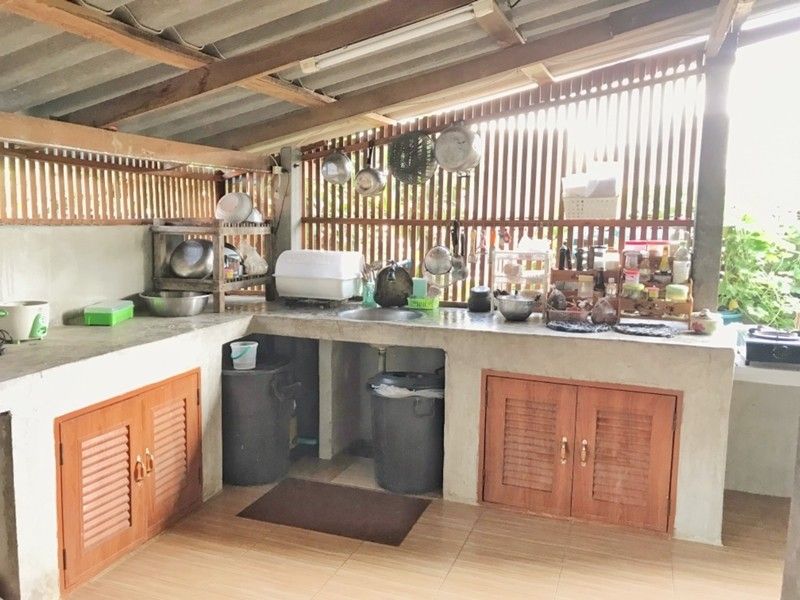 Anyone browsing Philippine real estate listings will sooner or later come across the term "Dirty Kitchen". It's not an insult – it's a standard feature of Philippine homes.
The reason is simple: Filipino cooking smells. Intensely. Fish sauce, bagoong, fried garlic, braised pork – all part of everyday life, but not something you want drifting through your living room. The outdoor kitchen handles the heavy work: boiling, frying, steaming, grilling. The indoor kitchen stays clean, odor-free, presentable.
Then there's the smoke. Many families still cook partly over open fire or with basic gas burners. A covered outdoor kitchen is ideal for that – well-ventilated, easy to clean, no soot on the walls.
For expats it feels unusual at first. Those who get used to it quickly appreciate it: the indoor kitchen stays genuinely clean – and so does the rest of the house.
Comfort Room (CR)
In Germany you say Toilette, WC, or Bad. In the Philippines it's CR – Comfort Room. Always. In property listings, hotel descriptions, everyday conversation. Ask for the "toilet" and you'll be understood – but expect a mildly puzzled look.
The term dates back to the American colonial period. "Restroom" or "Comfort Room" was the polite phrasing – and it stuck. To this day. When viewing a property in the Philippines, you count CRs, not bathrooms. Two CRs means two separate toilet and wash rooms – not necessarily with a bathtub.
For expats: just remember to say CR instead of toilet – it immediately makes you sound less like a tourist.
Subdivision
 Almost every residential development in the Philippines is called a Subdivision. It sounds bureaucratic – but it means something specific. A subdivision is a private, often walled residential compound with its own entrance, security staff, and shared rules. Think gated community – except in the Philippines it's the standard, not the exception.
The range is wide: from simple middle-class estates with 50 houses to large developments by Ayala Land or Filinvest with their own shopping centers, schools, and parks. The name "subdivision" says nothing about quality – the price does.
If you're buying or renting: always ask about the Subdivision Association Fees. Monthly charges for security and maintenance typically range from PHP 500 to PHP 5,000 depending on the development.
 Clean Title
"Clean Title" – two words that appear in every Philippine real estate listing. And they mean more than they seem to at first glance.
A clean title means: the property is registered under the Torrens system, the title is in the seller's name, and the Memorandum of Encumbrances shows no liens – no mortgages, no claims, no disputes. That sounds like a given. It isn't.
In the Philippines you'll find properties without a Torrens title, with forged titles, with unresolved inheritance issues, or with registered encumbrances the seller doesn't mention. "Clean title" is therefore not a marketing phrase – it's the minimum requirement. And even then: always verify yourself at the Registry of Deeds. Trust is good, a Certified True Copy is better.
Barangay
The barangay is the smallest administrative unit in the Philippines. Every city and municipality is divided into barangays – Dumaguete has 30, Cebu City more than 80. On average a few hundred to a few thousand people live in one barangay.
The Barangay Captain is not a figurehead. They mediate neighborhood disputes, issue Barangay Clearances (required for many government transactions), coordinate local security, and are the first point of contact for problems in the area. Anyone moving to a new neighborhood should register at the Barangay Hall.
For expats: a good relationship with the barangay is not a luxury. Being known and respected there makes government transactions, building permits, and neighborhood matters considerably smoother.
Tricycle & Habal-Habal
 Two transport options that are everywhere in the Philippines – and have no direct equivalent back home.
The tricycle is a motorcycle with an attached sidecar. It officially seats three to four people – in practice sometimes more. It's the everyday taxi in smaller towns and rural areas. Short trips cost PHP 10–20, longer ones are negotiated.
The habal-habal is a regular motorcycle used as a taxi – passenger rides on the back. On narrow mountain roads and in areas a tricycle can't reach, it's often the only option. Helmets are legally required – but not always provided. Bringing your own is not a bad idea.
Both are cheap, flexible, and a fixed part of Philippine daily life. If it feels uncomfortable at first: after two weeks it's completely normal.
Sari-Sari Store
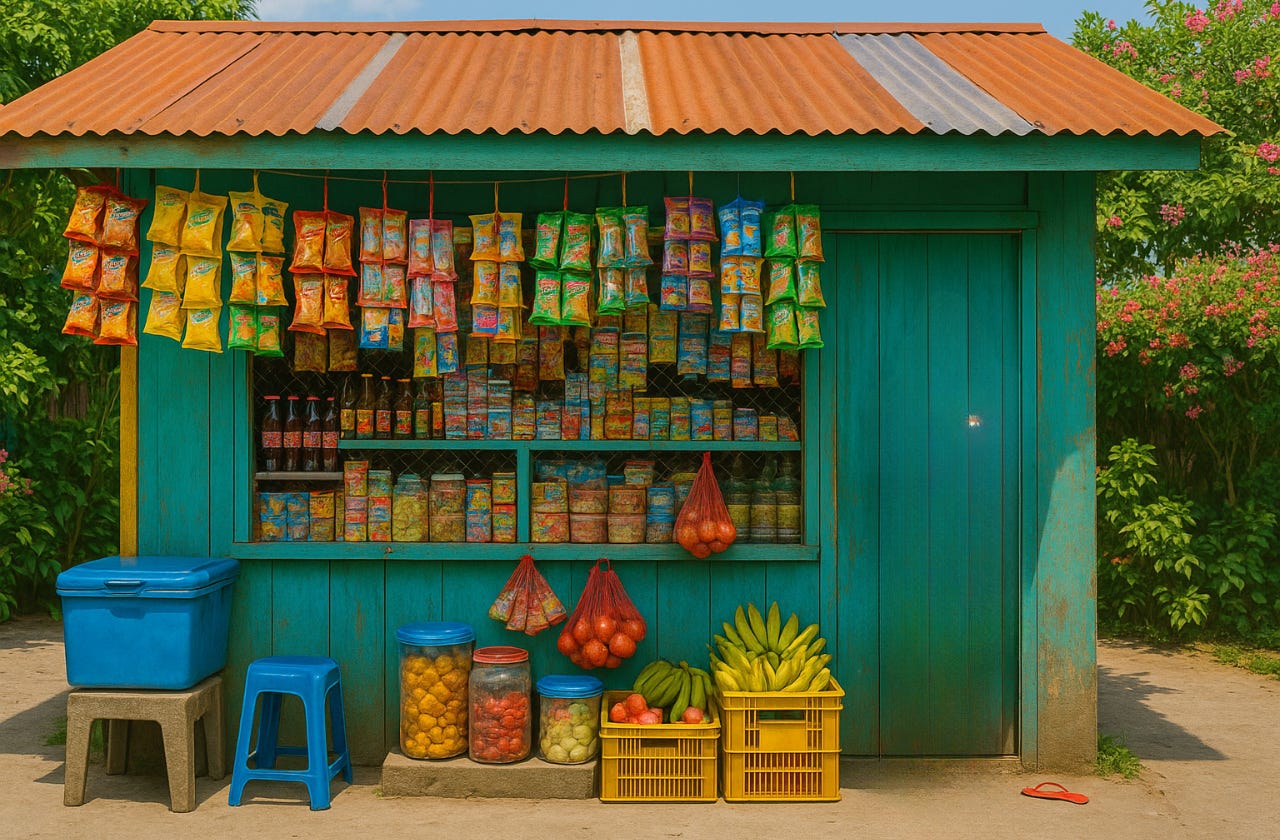 On almost every street corner in the Philippines you'll find a Sari-Sari Store. A small shop, often built directly into the owner's home, with a service window facing the street. The word "sari-sari" means "various things" in Filipino – which sums it up perfectly.
Shampoo in single-use sachets, instant coffee, rice, soft drinks, candles, cigarettes sold individually – everything in small quantities, always available. The concept works because many Filipinos don't have the budget for bulk buying. Small amounts, purchased daily.
For expats the sari-sari store is often the quickest solution when you run out of something in the evening. And a good way into the neighborhood – the owner usually knows everyone on the block.
Brown-out
 Power outages in the Philippines go by two names: blackout and brown-out. The difference matters.
A blackout is unplanned – a fault, a storm, an accident. A brown-out is scheduled. The local power provider announces it in advance, sometimes days ahead, sometimes by the hour. Reasons: maintenance work, capacity constraints, or load distribution across the grid.
In Dumaguete and most towns on Negros Oriental, brown-outs are less frequent than they were ten years ago – but they still happen. Announcements come via the local Facebook pages of the power provider (NORECO I or II) or through notices posted at the barangay.
Anyone living in the Philippines keeps a UPS for their router and laptop, candles within reach, and knows where the nearest generator-powered store is. Not a big deal – you just get used to it.
Helper (Kasambahay)
In most Western countries a household helper is a luxury. In the Philippines it's completely normal – even for people with a modest income.
Kasambahay is the official term, "helper" the everyday one. A full-time household helper in Negros Oriental typically costs PHP 4,000–7,000 per month (roughly USD 70–120) plus room and board if they live in. On top of that come legal obligations: 13th month pay, PhilHealth and SSS contributions, minimum wage by region.
The Kasambahay Law (Republic Act 10361) has governed the rights of domestic workers since 2013. Written contract, social insurance, one rest day per week – all legally required. Ignoring this risks complaints to the Department of Labor.
For many expats, hiring a helper is the most practical decision they make – and one of the most affordable.
Amortization
"I'm still paying amortization" – you hear this phrase a lot in the Philippines. It means: I'm still paying installments on my house.
Amortization is the everyday Philippine word for property installment payments. It comes from English, where it refers to the gradual repayment of a loan. In the Philippines it has become the standard term for any property purchase on installment, whether through a bank loan, developer financing, or a private agreement.
In property listings, "assume balance" often appears alongside amortization: someone bought a house, is still paying installments – and wants to transfer that obligation to a buyer. This can be a bargain or a trap, depending on how carefully the original contract is reviewed.
Open Air Living
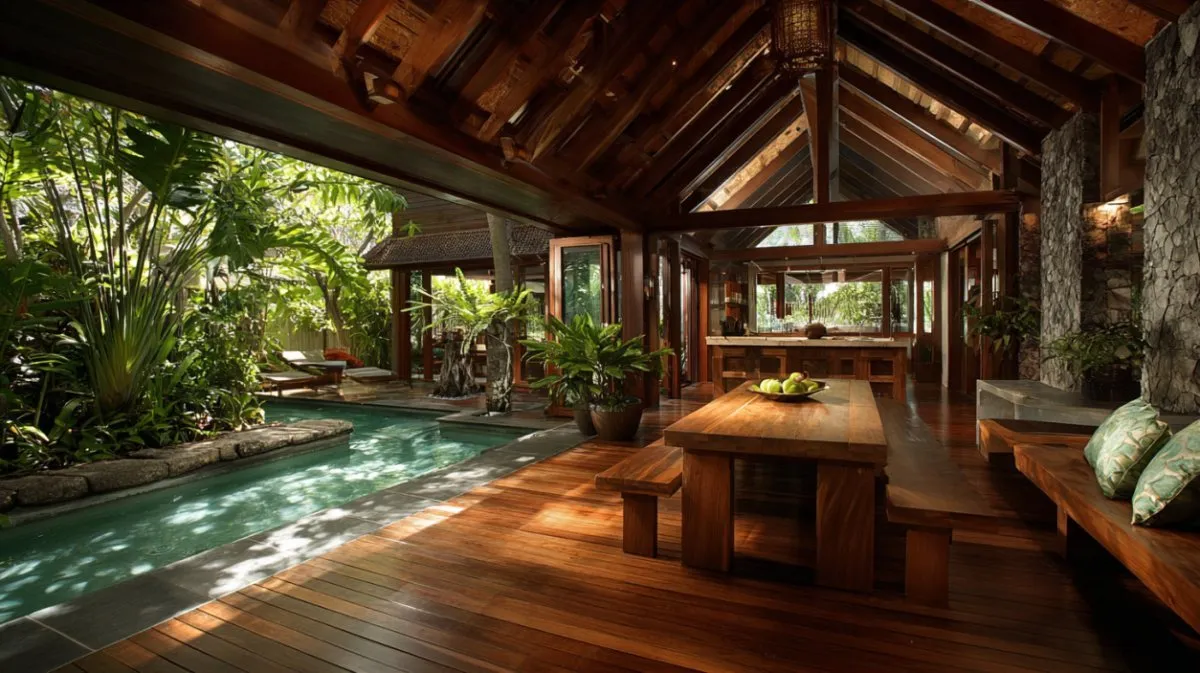
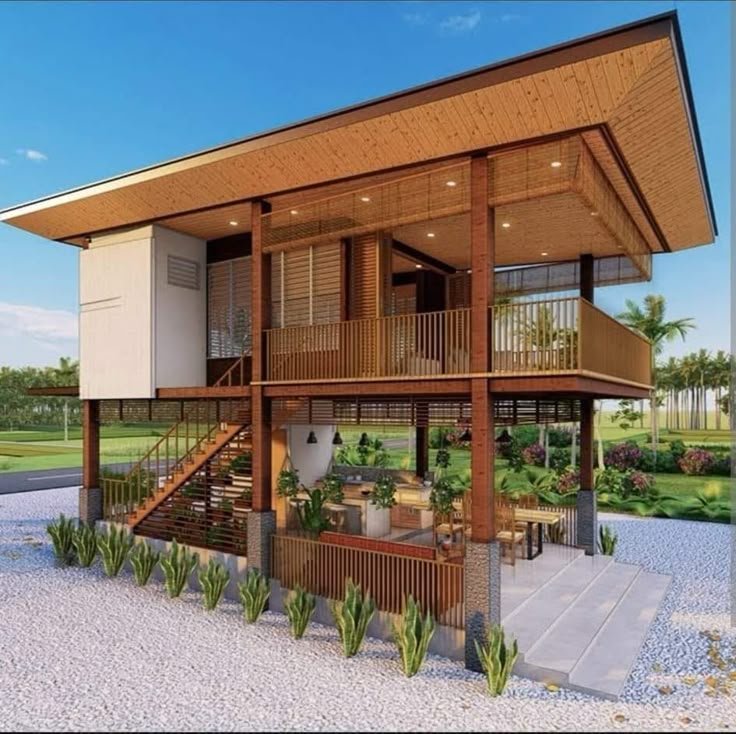 First-time visitors to a Philippine house sometimes stop and wonder: where are the walls? The living area flows directly into a covered terrace, windows have wooden shutters instead of glass, the dining area is half outdoors.
This isn't a construction shortcut – it's intentional. The Philippine climate makes enclosed rooms uncomfortable. Cross-ventilation is the air conditioning, open transitions between inside and outside keep temperatures bearable. Traditional Philippine houses – the Bahay Kubo built from bamboo and nipa palm – operated entirely on this principle.
Modern houses combine both: air-conditioned bedrooms for sleeping, open living and dining areas for the day. Those who embrace it quickly realize it works. And suddenly life happens much more outdoors than it ever did before.