
Tricycles in Dumaguete: A Little Survival Guide
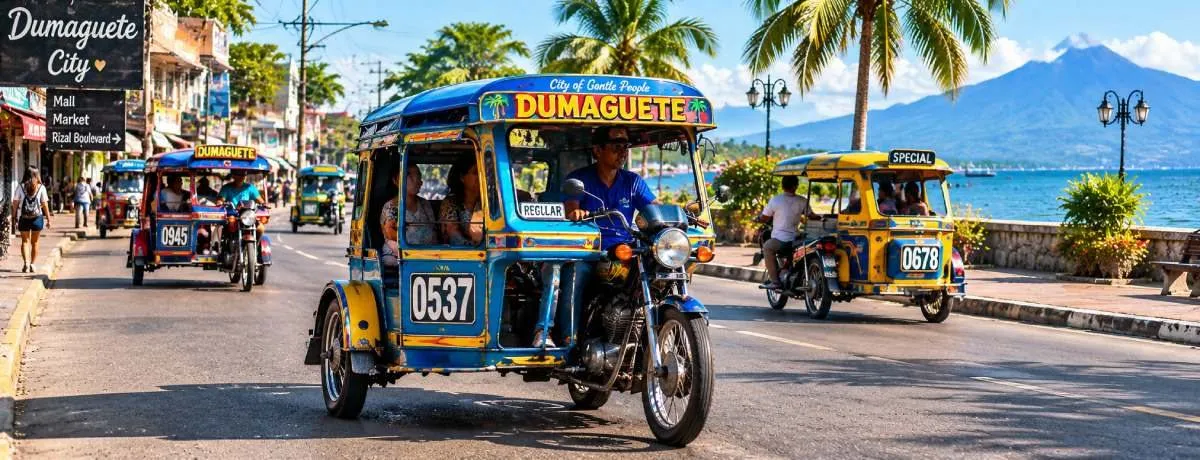
If Dumaguete had a mascot, it would probably be the tricycle. These rattling motorbikes with a covered sidecar are everywhere: outside the mall, at the market, on Rizal Boulevard, outside the bar at three in the morning. Around 2,500 of them are registered in the city, and they're some of the biggest in the country. A Dumaguete trike is almost as wide as a car.
To newcomers it all looks chaotic at first. It isn't, really. Once you know a few rules, you can get almost anywhere quickly and cheaply.
Regular or "special"?
This is the most important thing to know. There are two ways to ride:
- Regular: You share the trike with other passengers going the same way and pay per person. By far the cheapest way to get around town.
- Special trip: The trike is all yours and takes you straight to your destination. It usually costs two to four times the regular fare.
When you get in and the driver asks "Special?", that's what he means. If you don't want one, just say "Regular".
How much does a ride cost?
The city sets the fares and adjusts them when fuel prices change, so they shift from time to time. If you're not sure, ask for the current rate. Many trikes have the fare matrix posted inside.
As a rough idea: a regular ride in town costs only a small amount per person, and students and seniors get a discount with ID. For a special trip, agree the price before you get in, especially late at night, when it costs more.
For longer trips out of town (to the airport in Sibulan, to Valencia, Bacong or Dauin) there are set standard prices. They're worth it, especially with luggage. But here too, ask first.
How it works
- Getting one: Just wave. A free trike will almost always stop.
- Saying where: Name a well-known place rather than an address: "Robinsons", "Lee Plaza", "Silliman", "Public Market". Every driver knows those.
- Getting off: If you want to get off earlier, just let the driver know, a wave or a tap on the roof usually does it.
- Paying: When you get off, in cash. Carry small change. With a 500-peso note you often won't get any.
Things that shouldn't surprise you
Some things are just part of it. With a bit of humour, they're easy to live with:
- "Always one more!" A trike is never full. Where four sit, six fit. If need be, behind the driver.
- Detours: The driver drops off the other passengers first, picks up a cousin on the way, or stops for fuel.
- Renegotiating: Sometimes you're asked for a bit more than agreed at the end. A friendly "No, we said …" is usually enough.
- Rush hour: Between five and eight in the evening, many trikes are full, and drivers heading home won't take you. Just wave down the next one.
Our tip for newcomers
Take plenty of tricycles in your first weeks before you get your own vehicle. You'll get to know the city, get a feel for the traffic, and quickly see which neighbourhoods are well connected and which aren't.
That's worth a lot when you're looking for a house or condo. A home on a street with regular trikes is far easier in daily life than one at the end of a quiet dead-end road. Genessa is happy to show you how well a location is connected when you view a property. And if you're wondering whether you need a motorbike at all, read our piece on getting around Dumaguete with or without your own vehicle.
Bottom line
In Dumaguete, the tricycle isn't just transport. It's part of daily life. Cheap, quick, sometimes a little chaotic, and pretty much indispensable. If you know the difference between "regular" and "special", carry small change and agree the price for special trips first, you're nearly a local.
Sources
- Dumaguete.com – Tricycles, rules and fares – local information on the city's main mode of transport.
- Wikipedia: Dumaguete – tricycles as the city's main public transport.

